Showing posts with label Good Shepherd. Show all posts

Saturday, March 9, 2024

Three Found Treasures


Three Found 


When I was six, I traveled with my parents to Houston, where we visited Neiman Marcus, a fancy department store. I remember being entranced by so many beautiful shiny things! Sparkling crystal, baubles encrusted with glass jewels, golden plates, and gowns shimmering in sequins and beads all caught my eye.

Before I knew it, I had wandered off from my parents, and they were nowhere to be found! I ran around frantically, calling out for them, but there was no answer. Devastated, I broke into uncontrollable sobbing. A kindly woman approached me and asked what was wrong.

“I’ve lost my parents!” I exclaimed.

“What do they look like?” she asked.

“Don’t worry,” I reassured her. “I’ll know them when I see them.”

All is well that ends well, and my parents were just around the corner, apparently caught up in some treasure hunting of their own. But that was long before the days of children being kidnapped in malls or the need to be paranoid every moment they are out of sight.

Remembering this story made me realize that to be found, three things must happen. We must first realize that we are lost; we must want to be found; and we must recognize the person who will find us.

God is a Triune Being: Father, Son, and Holy Spirit, and that nature is reflected in patterns of threes found throughout His Word. Salvation is the central theme of Scripture, so it is not surprising that Jesus spoke three parables about salvation in which a lost animal, object or person is found (Luke 15).

The chapter opens with Jesus teaching the publicans and sinners, namely those thought by society to be wicked beyond help. But many of them realized their own sorry state, and therefore came near Jesus to hear His words of wisdom, comfort, and healing (v. 1).

This ministry grouping of three is diametrically opposed by a judgmental grouping of three: the Pharisees and scribes criticize Jesus for associating with the baser element of society. The religious leaders of that day, who should have been most receptive to Jesus as the Son of God, instead were gossiping about Him, accusing Him of receiving sinners and of defiling Himself by eating with them (v. 2).

Jesus then teaches three parables aimed at the repentant sinners, the religious leaders trusting in their own self-righteousness, and all readers of the Gospel thereafter. Each of these parables has three elements: the lost treasure; those not considered lost; and the One Who finds the lost.

Jesus later describes Himself as the Son of man Who came to seek and to save that which was lost (Luke 19:10). In three verses He states that He came to call not the righteous, but sinners, to repentance (Matthew 9:13; Mark 2:17; Luke 5:32). Until we know that we are lost in our sins to the point of death (Ephesians 2:1,5; Colossians 2:13); that we have no righteousness of our own (Isaiah 64:6), and that we  need to repent (Acts 3:19; 5:31), we cannot be saved.

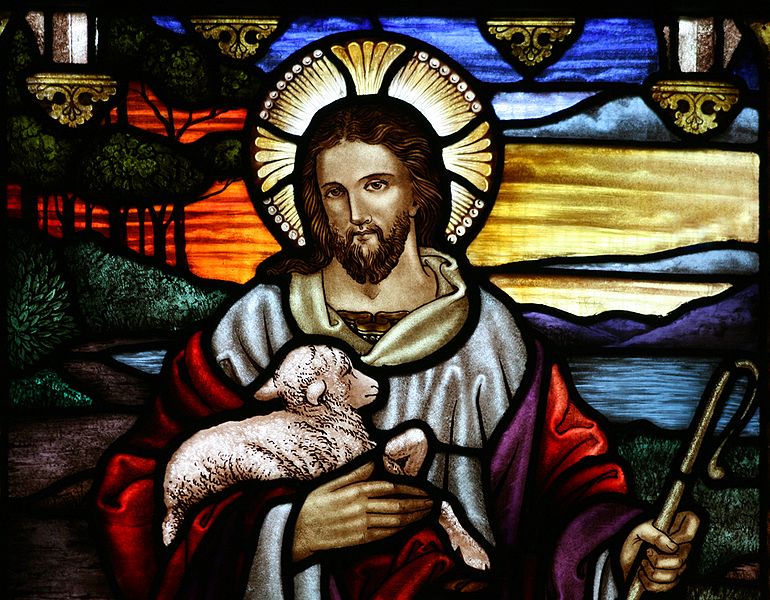
The first parable tells of a shepherd whose priorities seem somewhat unusual by worldly standards. He leaves the bulk of his flock – 99 of 100 sheep – to fend for themselves in the wilderness, while he goes looking for one lost sheep until he finds it (Luke 15:3-4). An earthly shepherd who did this would be considered somewhat daft, as he would leave most of his livelihood vulnerable to being eaten by predators, falling down a cliff, or wandering away from the flock.

But thankfully, our Lord Jesus Christ is the Good, Great and Chief Shepherd (John 10:11-18; Hebrews 13:20; 1 Peter 5:4) Who is everywhere to save His flock from danger, and Who will never leave nor forsake us (Hebrews 13:5). 

Like sheep, people are also vulnerable to three types of danger. In spiritual terms, these are being devoured by the devil (1 Peter 5:8), falling into temptation because of our sinful flesh (1 Corinthians 10:12), and wandering away when we are lured by worldly pleasures (James 1:14-15; 2 Timothy 4:10), namely the lust of the eyes, the lust of the flesh, and the pride of life (1 John 2:16).

Sadly, we are unaware of our exposure to these dangers until we are saved, and we can’t be saved until we know we are lost. In the parable, therefore, the Shepherd, Who is Christ Himself (Psalm 23) makes the lost sheep His highest priority, not resting until He can safely place it across His shoulders Luke 15:5).

Praise God that He goes to such great lengths to seek us out once we want to be found (James 4:8; Ezekiel 34:11), to work on our heart, and to save us through His grace! (Ephesians 2 8-9) But He does this only if we come to the end of ourselves (Psalm 40:2), know we can’t make it to Heaven on our own (Habakkuk 3:19), and realize we need the Saviour! (1 Timothy 1:15) Then He saves us by our faith in His death, burial and resurrection (1 Corinthians 15:1-4) as the only Way (John 14:6) to Heaven.

Once the lost sheep in the parable is found, there is great rejoicing by the Shepherd, His friends and neighbors (Luke 15:5-6).Jesus explains the parallel to the joy in heaven over one sinner that repents of his sin and knows that he needs the righteousness of Christ (1 Corinthians 1:30; Philippians 1:11; 3:9). Those who rely on their own good deeds to get to Heaven far outnumber (in the parable, 99 to 1) those who trust only in the Saviour (Matthew 7:13).

But these “good” people bring little joy to heaven even if they appear to lead moral and just lives on earth (Luke 15:7). Anyone who relies on keeping the law to get to heaven is doomed to failure, because all have sinned and fallen short of God’s glory (Romans 3:23), and whoever has broken the smallest part of the law is considered guilty of transgressing all of it (James 2:10). Any joy over their “good” deeds is short-lived, for their destiny is eternal separation from God in hell (John 3:18) unless they realize they are lost so they can be born again (John 3:3-8).

In the second parable, Jesus tells of a woman who drops everything she is doing to find one silver coin she has lost from her stash of ten. She lights a candle, sweeps the house, and seeks diligently until she finds the missing treasure (Luke 15:8). I believe this parable gives further clues to God’s loving and thorough process in saving the lost sinner.

God gave us His Word as a light for our path (Psalm 119:105), for saving faith can only come by hearing the Word of God (Romans 10:17). Often, part of the process of our realizing how lost, helpless, and needy we are involves God sweeping away the clutter that hinders our dependence on Him. These weights (Hebrews 12:1) may be idols of money, power, health, relationships, and even family, for if these give us too much satisfaction, we may not realize we need God (Matthew 19:24).

Which brings me back to my childhood anecdote – I knew I was lost, I wanted to be found, and I knew whom I was seeking. I had no worries that I would fail to recognize my parents. But when I grew up, I spent much of life feeling miserably lost and wanting to find truth, peace and joy, yet not knowing the only One Who could save me. Like so many, I was a “seeker,” looking for truth in all the wrong idols, philosophies and false teachings (2 Peter 2) until the only Way found me (Acts 17:26-27).

In the parable, there was great rejoicing by the woman who found her lost coin, and by her friends and neighbors, just as there is by the angels in heaven (Luke 15:9-10) every time a lost soul is found! We shall also see this next week in the third parable of the Prodigal Son (Luke 15:11-32).


 © 2015 Laurie Collett
Reposted from the archives

Saturday, December 17, 2022

Legend of the Candy Cane

Photo by Mikereichold 2008

Familiar Christmas decorations and their colors may open the door for Christians to talk to unsaved people about Christ, as their symbolism reminds us of different aspects of Christ’s life and God’s plan of salvation. Legend has it that in the 18th century, a candy maker in Europe designed the candy cane to serve as a witness to his Christian faith and to incorporate several symbols for the birth, ministry and death of Jesus.

In the candy maker’s home country at that time, Christian oppression made it illegal to make public displays of Christianity or even to own a Bible or cross, let alone a manger scene. He prayed that God would show him how he could share the true story of Christmas with local children by offering them a unique and meaningful treat.

This confection would be a stick of candy, white to symbolize the Virgin Birth (Isaiah 7:14; Luke 1:35) and the sinless purity of Jesus (I John 1:7), and hard to symbolize the solid Rock, the Foundation of the Church (2 Samuel 22:3,47; Psalm 18:2,46;62:2,6, etc. Matthew 16:18). It was flavored with peppermint, an herb of the same family as hyssop, which was used for temple sacrifices and purification (Psalm 51:7; Exodus 12:22; etc; Hebrews 9:19) and offered to Jesus as He suffered on the cross (John 19:29).

The candy cane is shaped like a "J" for the name of Jesus (Luke 1:31, Matthew 1:21), and like the staff of the Good, Great and Chief Shepherd Who gave His life for His sheep (John 10:11,15; Hebrews 13:20; 1 Peter 5:4). who would hear His voice and follow him (Psalm 23:1, John 10:27-30, Isaiah 40:11). Two canes together touching at both ends forms the shape of a heart, symbolizing God’s love for us (1 John 4:8; Zephaniah 3:17). 

A large red stripe on the candy cane denotes the blood shed by Christ on the cross (Romans 3:25; Colossians 1:20) for the remission of our sins (Matthew 26:28), by which we are saved to eternal life (Revelation 1:5, John 3:16, Luke 22:20), and three small stripes symbolizing the whipping Jesus received, by which we are healed (Isaiah 53:5; 1 Peter 2:24).

White at Christmas time reminds us of angel robes (Matthew 28:3) and wings and of snowflakes falling, as pristine as Christ is pure and completely without sin (Psalm 51:7). The glorified body of Christ was clothed in shining robes “white as snow” when He appeared to Daniel as the Ancient of Days (Daniel 7:9), to the inner circle of apostles at His transfiguration (Mark 9:3), and to John at His revelation (Revelation 1:14).

The nativity scene would be incomplete without white sheep led by shepherds, emphasizing the importance of our following the Good Shepherd and depending on Him for all we do (Psalm 23). The purity of white reminds us that Jesus is the lily of the valleys (Song of Solomon 2:1), and that the Holy Spirit took on the appearance of a dove as Jesus was baptized (Matthew 3:16).

Red symbolizes each drop of precious blood Jesus shed for us on Calvary’s cross (Matthew 26:28), which washes us clean so that when God sees us, He sees not our sin, but the perfect sacrifice of His blameless Son (Hebrews 9: 11-13; John 1:7).

When we see a red stop sign or traffic light, it warns us of danger. “Red” means stop – - our sinful ways, our wicked thoughts, our worldly lifestyle (1 Peter 4:1). And yet, red also symbolizes fire or passion. God wants us to be on fire for Him, as He is a consuming fire (Hebrews 12:29; Revelation 19:12), our hearts burning with His Word (Jeremiah 20:9; Luke 24:32) and our lives burning brightly with the Holy Spirit (Acts 2:3).

As we enjoy a candy cane, may this iconic symbol remind us of Lord Jesus Christ, God Himself, Who came in the flesh (John 1:14) to save us by paying our sin debt in full as He died on the cross, was buried, and rose again the third day, proving His Deity! May we lead others to invite Him into their heart by trusting in this Gospel (1 Corinthians 15:1-4), so that they too can have eternal life!

Merry Christmas to all, and all blessings for 2023 and until He comes again! May you experience the love, joy and peace that comes only from knowing Jesus Christ as your Lord and Savior!

© 2019 Laurie Collett

Reposted from the archives


Saturday, June 27, 2020

A Lesson in Psalms: Honey, Beth, Best, Staff

Photo (2009) by Toby Hudson

As regular readers of this blog may know, I often have detailed and vivid dreams. Recently, however, I awoke with no memory of a dream, but only with four words in my mind: Honey – Beth – Best – Staff.

I had no idea what this meant, particularly since I don’t know anyone named Beth, or what the Lord might be trying to tell me, until my husband and I began our daily devotional readings. The first passage designated for that day was from Psalm 119, including the portion labeled “Beth” in our King James Version Bible! 

This Psalm is not only the longest book in the Bible, but also a stunning example of God’s literary craftsmanship and design. Its twenty-two stanzas each contain eight verses and are each subtitled with one of the twenty-two letters of the Hebrew alphabet, in alphabetical order. Each verse begins with the same letter for which the stanza is named.

Not surprisingly, Psalm 119 is all about God's Word, praising it, urging us to love it and meditate on it, and to learn from its laws and commandments. God bringing the “Beth” stanza of Psalm 119 into our daily reading encouraged me to consider in the context of the Psalms the meaning of the four words He summoned into my mind. 

“Honey,” the first word in my dream phrase, is first mentioned in the Psalms in Chapter 19, which praises God’s law, testimony, statutes, and commandments. We are to observe these in fear of the Lord, meaning in an attitude of respecting and revering His judgments (Psalm 19:7-8).   

Normally we think of judgments as being punishments, yet this Psalm says that they are true and righteous, more desirable than much fine gold, and sweeter than honey and the honeycomb. Why? Because they warn us of how not to sin against God, and if we keep them, we will be richly rewarded (Psalm 19: 9-11). 

Blessings, like honey, often come in unexpected settings. Samson found honey in the carcass of a lion he had slain with his bare hands (Judges 14:5-9), suggesting that sometimes we must endure great trials before we can enjoy the rewards of victory. The struggle itself makes the blessing that much sweeter, like a spoonful of honey a mother gives her sick child after he swallows the bitter medicine. 

The sweetest blessing and reward anyone could have is salvation and eternal life, given freely to all who trust in the death, burial and resurrection of the Lord Jesus Christ (1 Corinthians 15:1-4) as the only Way to Heaven (John 14:6). Before we tasted of the Lord’s goodness (Psalm 34:8), we were His enemies, hating Him and rebelling against Him. But His infinite love for us is shown in His death for us even when we were His enemies, reconciling us to Holy God and giving us eternal life (Romans 5:10). 

Once submitted to Him, He will satisfy even His enemies with the finest wheat, for He is the bread of life, and with honey out of the rock (Psalm 81:10-16), for He is the Rock of our salvation (Psalm 18:2,48; 62:2-7; 89:26; 95:1). 

BETH (Psalm 119:9-16). 

Psalm 119:9 Wherewithal shall a young man cleanse his way? by taking heed thereto according to thy word.
10 With my whole heart have I sought thee: O let me not wander from thy commandments.
11 Thy word have I hid in mine heart, that I might not sin against thee.
12 Blessed art thou, O Lord: teach me thy statutes.
13 With my lips have I declared all the judgments of thy mouth.
14 I have rejoiced in the way of thy testimonies, as much as in all riches.
15 I will meditate in thy precepts, and have respect unto thy ways.
16 I will delight myself in thy statutes: I will not forget thy word. 

This stanza explains that following God’s Word is our best defense against sin, and that joy comes from incorporating it into our being! We must study it, for it reveals God and His ways and character. We must treasure it, share it with others through our witness, meditate on it, and delight in it. 

Later on in Psalm 119, verse 103 reminds us that God’s Word is sweeter than honey to our mouth. If we fill our heart and mind with this sweetness (Philippians 4:8), rather than with the bitter poison of sin and negativity, it will overflow into our speech and actions, refreshing others like a pure fountain or spring (James 3:11). 

Best

Surprisingly, there is only one mention of the word “best” in the Psalms: Behold, thou hast made my days as an handbreadth; and mine age is as nothing before thee: verily every man at his best state is altogether vanity. Selah. (Psalm 39:5). 

This is not using the word in a positive context, but rather is a warning against placing any stock in our own strength. God is infinite and eternal (Hebrews 13:8), whereas our physical life disappears like a puff of smoke (James 4:14). Even at our “best” we are nothing in comparison to Him (Psalm 8:4). He gives us our very life, our next breath, our salvation, and the best gifts, namely spiritual gifts, all of which pale beside His infinite love (1 Corinthians 12:31-1 Corinthians 13). 

Staff 

How can we therefore make the best use of the limited lifespan He has allotted to us, as well as of the time, talents, treasure and spiritual gifts He has distributed to us? By thankfully accepting and following His correction, according to these four words He placed in my mind. In what seems to be hardship and judgment there is great blessing, when He uses it to shape us into His image (Philippians 3:10). 

Just as a loving father disciplines his children for their own good, a shepherd guides His sheep by getting their attention with the rod and staff. The word “staff” in the Psalms first appears in Psalm 23, the Shepherd’s Psalm: 

4 Yea, though I walk through the valley of the shadow of death, I will fear no evil: for thou art with me; thy rod and thy staff they comfort me. 

We don’t normally think of being poked with a rod or pulled along with the crook of a staff as being a comfort, but David in his darkest hours recognized the healing and restoring power of God’s loving hand of correction, as expressed in the above verse. We can take solace in the pain, knowing that we are saved thereby even from the power of death. God is our loving Father Who corrects His children when we drift off His narrow path into harm's way (Hebrews 12:5-11).

Jesus Christ is the Good, Great, and Chief Shepherd (John 10:11-18; Hebrews 13:20; 1 Peter 5:4), guiding us when we, as sheep, have gone astray (Psalm 119:176; Isaiah 53:6; Matthew 18:12). With His staff He will lead us through the valley of the shadow of death, not leave us helpless or hopeless within it. As we pass through that valley we find goodness and mercy, and as we emerge from it we will dwell in the house of the Lord forever (Psalm 23:6). 

The only other mention of “staff” in Psalms is in Psalm 105:16, referring to another type of judgment, with the Lord calling for a famine upon the land and breaking the whole staff of bread. This is a reminder that God provides for our physical nourishment through bread, which is the staff of life; and for our spiritual sustenance through His Word, which is the staff of spiritual life. We would starve if He were to withhold bread from us, but our worst judgment comes from being deprived of hearing His Word.

Honey – Beth – Best – Staff reminded me that the sweetest blessings can come from God’s Word, not only as a source of comfort, but as a correction when we stray far from His chosen path. May we hide His Word in our heart, that we would not sin against Him!

© 2020 Laurie Collett