Showing posts with label Passover. Show all posts

Saturday, November 29, 2025

Feasts and Prophecies: Reflecting the Trinity


Just as God’s Triune nature is reflected in His creation, in the names of His Son, and in Temple worship, so it is in the special feasts Jehovah designated for Old Testament worship, and in prophecies corresponding to these feasts.

The Seven Feasts (Leviticus 23) that God set apart for Israel as special times of worship include three spring feasts, one summer feast, and three fall feasts, each with prophetic meaning. The prophesies of the three spring feasts: Passover, Unleavened Bread, and Firstfruits, have already been fulfilled by Jesus Christ in His death, burial and resurrection -- the triad underlying Christian faith (1 Corinthians 15) -- at the times of year God set apart to celebrate these feasts.

Jesus Himself declared that He was the fulfillment of prophecies in all three divisions of the Old Testament (Luke 24:44): the Law, the Prophets, and the Psalms (poetic books),

Passover (Leviticus 23:5) commemorates the deliverance of the Israelites from the curse intended for the Egyptians. The destroyer claimed the life of every firstborn unless the home was protected by the blood of a sacrificed lamb, marking the three points of the cross on the two side posts and upper post of the front door (Exodus 12). This foreshadows the perfect sacrifice of Jesus, the Lamb of God, Who paid for all our sins. At the Feast of Passover in 33 AD, Jesus was crucified and shed every drop of His blood as the Lamb Who takes away the sins of the world (John 1:29).

He was buried the next day, on the Feast of Unleavened Bread (Leviticus 23:6-8; Exodus 12), symbolizing Jesus as the Bread of Life (John 6) containing no leaven, which represents sin (Matthew 161 Corinthians 5:6-8). On the third day, on the Feast of Firstfruits (Leviticus 23:10-14), Jesus rose from the dead, representing the firstfruits from the dead (1 Corinthians 15:20-23) and making the way for us to follow. Because He rose and ascended into Heaven, all who trust in Him have eternal life (John 3:16).

The summer feast was the Feast of Weeks, or Pentecost (Leviticus 23:15-22). This feast was also fulfilled prophetically at the preordained time when, 50 days after Christ’s ascension, the Holy Spirit descended with flaming tongues of fire upon the disciples of Jesus (Acts 2:1-4), empowering them to spread the Gospel to those speaking any language.

Prophetically speaking, the remaining three feasts are still unfulfilled, but the prophecies symbolized by these fall feasts (Trumpets, Day of Atonement, and Tabernacles) will one day come to fruition, again through Jesus Christ. The Feast of Trumpets (Leviticus 23:23-25) corresponds to the trumpet of the Lord sounding at the Rapture, for all believers to be caught up in the air to meet with Jesus (1 Thessalonians.4:15-17). This glorious moment, long awaited by believers, will also begin the prophesied 70th week of Daniel (Daniel 9:2) and the seven-year Tribulation period (Matthew 24:21; Revelation 7:14).

The Day of Atonement (Leviticus 23:26-32) foreshadows the return of Christ (Matthew 24:29-31), which will occur at the end of the seven-year Tribulation. The King of Kings will return in glory and power for the battle of Armageddon and judgment to occur at the Day of the Lord (Joel 2:28-32; Matthew 13:30; Revelation 16:16).

Finally, the Feast of Tabernacles (Leviticus 23:33-43) originally commemorating the Israelites dwelling in tents as they fled from Egypt, will be fulfilled as Jesus Christ dwells among, or tabernacles with, His people during the 1000-year Millennial Kingdom (Revelation 21:3). This will be an unprecedented time of joy, peace and productivity as the deserts will bloom (Isaiah 35:1-2), rivers will spring forth (Isaiah 43:19), and former animal predators will be harmless to us and to their fellow creatures (Isaiah 11:6; 65:25).

In this seemingly long interval between the past fulfillment of prophesies corresponding to the spring and summer feasts, and the future fulfillment of prophesies corresponding to the fall feasts, God has continued to guide our Church Age worship in ways still reflecting the Trinity. Praise God for His perfect plan, orderly creation, and continued guidance!


© 2012 Laurie Collett
Edited and reposted from the archives

Saturday, March 17, 2018

The Lord’s Supper: Before, During and After

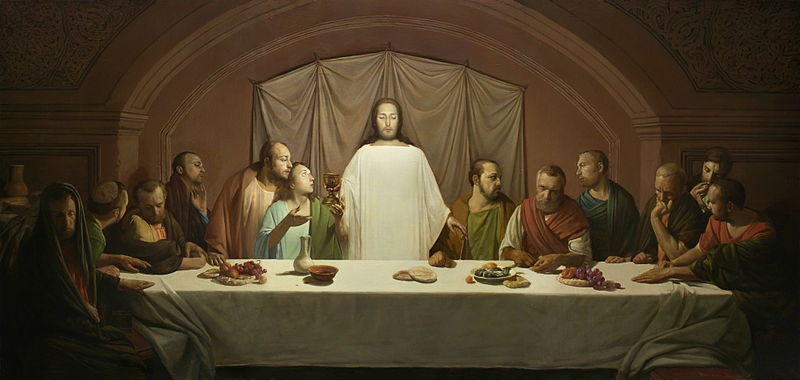
God’s Triune nature, reflected in triplets of Scripture throughout the Bible, is echoed in the Lord’s Supper (Matthew 26:17-30; Mark 14:12-21; Luke 22:7-30)

This memorable meal, with special significance to Jesus, to His apostles, and to born-again believers, looked back to the past, celebrated the present, and anticipated the future

The Lord’s Supper, convened by Jesus with His disciples the night before He was crucified, took place on the first day of the feast of unleavened bread (Matthew 26:17) during Passover. Finding the guestroom for this meal involved three people: the disciples Peter and John, and an unnamed servant (Mark 14:13-16; Luke 22:8-13). 

Jesus arranged for this supper by telling the disciples to go into the city, to meet the servant whom they would recognize by his carrying a  pitcher of water, and to ask his master to lend Jesus the large upper room for the meal (Mark 14:13). 

There are many theories about what Jesus and the twelve consumed at the meal, but Scripture only mentions bread (Mark 14:22; Matthew 26:26), fruit of the vine (Mark 14:25; Matthew 26:29; Luke 22:18), and a dip for the bread (Mark 14:20; Matthew 26:23), most likely olive oil (Exodus 29:2) containing bitter herbs (Numbers 9:11). Lamb would not be on the menu that day, as no work, such as killing, preparing, and cooking a lamb, could be done on the first day of the feast of unleavened bread (Leviticus 23:4-7).

It is fitting that the Passover lamb could not be sacrificed until the following day (Exodus 12:6), when Jesus Christ, the sacrificial Lamb Who takes away the sins of the world (John 1:29), would Himself be crucified beginning at the third hour (Mark 15:25) of the day (around 9AM), with the time of death at the ninth hour, around 3PM (Mark 15: 34).

Jesus knew the agonizing ordeal He would face in a few hours, yet He began His last meal by giving thanks (Matthew 26:27; Mark 14:23; Luke 22:17-19), emphasizing that we should thank God in all circumstances (1 Thessalonians 5:18).

He knew that He was about to be betrayed, arrested and subjected to three false trials; rejected, humiliated, and scorned by His chosen people; and beaten, crowned with thorns, and crucified. Even worse, all but John of His beloved disciples abandoned Him during this ordeal; He had to witness the heartbreak of His mother; and at the moment He took on all of mankind’s sins, God had to look away and Christ could not call Him “Father” (Matthew 27; Mark 15; Luke 23; John 19).

Jesus explained the symbolism of the Last Supper to His disciples (Matthew 26:26-28; Mark 14:22-24; Luke 22:17-20). The bread He broke represented His body that would be broken on the cross; the fruit of the vine represented His blood that would be shed to take away mankind’s sin; and all were to drink of the cup to symbolize their spiritual union with Him.

The same three products consumed at the Lord’s Supper constituted the meat and drink offering given at the feast of firstfruits, which looked forward to Jesus as the First to rise from the dead to a glorified body. The meat offering was cakes made of two tenth deals of fine flour mixed with olive oil, and the drink offering was the fourth part of an hin of wine (Leviticus 23:13).

The absence of leaven in the offering cakes, in the manna God provided to feed His children in the wilderness (Exodus 16:15,31), and in the Passover bread connotes the absence of sin (1 Corinthians 5:6-7) in Christ. He is the Bread of Life (John 6:35,48), the Bread of God (John 6:33), and the Living Bread giving eternal life (John 6:51) to all those who trust in His death, burial and resurrection (1 Corinthians 15:1-4) as the only Way to Heaven (John 14:6) .

For Jesus and His apostles, the Lord’s Supper therefore remembered God’s deliverance and acts of worship established in the past: His sparing the firstborn Hebrew children from the angel of death in Egypt (Exodus 12:12-13; 21-23); the feast of unleavened bread (Exodus 12:17; 23:15; 34:18; etc.) to commemorate the Passover, and the temple offerings at the feast of firstfruits (Leviticus 23:13).

At the first Passover, the scarlet thread of redemption by the blood was dramatically shown in the blood sacrifice of the lamb, to mark with blood the lintel and two side posts of each doorway (Exodus 12:5-7;22-23). This forerunner of the sign of the cross signified that the angel of death should “pass over” the homes thus marked, sparing the life of the firstborn within.

For all those sealed by our faith in Jesus’ shed blood on the cross, death will “pass over” us in that our physical body will die, but we will pass through the valley of the shadow of death (Psalm 23:4)., and we will live eternally with Christ (2 Corinthians 5:8). Our soul and spirit will forever be with the Lord and will ultimately inhabit our glorified body, which will never age, get sick, or die (1 Corinthians 15:35-54).

During the first Lord’s Supper, Jesus and His apostles were highly engaged in the present moment. Jesus had longed for and was now savoring His fellowship with the disciples (Luke 22:15), serving them (Matthew 26:26-27; Mark 14:22-23), and teaching them by His example, by explanation, and by warnings that they would betray, deny, or abandon Him (Matthew 26:21-24; Mark 14:18-21; Luke 22:21-34).

The disciples responded at first with self-examination, each asking with great sorrow if he was the one who would betray Christ (Matthew 26:22; Mark 14:19), but this soon degenerated into arguing over who would be the guilty one and even into jockeying for position regarding who could be considered the “best” disciple (Luke 22:23-24).

How this must have grieved Jesus, particularly on the eve of His crucifixion, and yet don’t we do the same today? We examine our own hearts all too briefly, then attempt to justify ourselves by judging sins in others and concluding wrongly that we’re better by comparison.

While remembering the past and living in the present, Jesus also used His last supper before His death to prophecy the future. He prophesied that His body would be broken and His blood shed in His crucifixion. He looked forward to the new covenant between Holy God and sinful man, reconciling them by His perfect, sinless sacrifice to pay the entire debt for all our sins (Matthew 26:28). Finally, He prophesied His coming Kingdom, when He would again eat the unleavened bread and drink the fruit of the vine in fellowship with His beloved at the Marriage Supper of the Lamb (Matthew 26:29; Luke 22:16,18).

Each time we celebrate the Lord’s Supper, we should remember Christ’s sacrifice, thank Him for our salvation, and look forward to His Second Coming! 

© 2015 Laurie Collett
Reposted from the archives


Saturday, April 11, 2015

The Lord’s Supper: Before, During and After

Photo by Frederique Defrade 2010


God’s Triune nature, reflected in triplets of Scripture throughout the Bible, is echoed in the Lord’s Supper (Matthew 26:17-30; Mark 14:12-21; Luke 22:7-30). This memorable meal, with special significance to Jesus, to His apostles, and to born-again believers, looked back to the past, celebrated the present, and anticipated the future.

The Lord’s Supper, convened by Jesus with His disciples the night before He was crucified, took place on the first day of the feast of unleavened bread (Matthew 26:17) during Passover. Finding the guestroom for this meal involved three people: the disciples Peter and John, and an unnamed servant (Mark 14:13-16; Luke 22:8-13).

Jesus arranged for this supper by telling the disciples to go into the city, to meet the servant whom they would recognize by his carrying a  pitcher of water, and to ask his master to lend Jesus the large upper room for the meal (Mark 14:13).

There are many theories about what Jesus and the twelve consumed at the meal, but Scripture only mentions bread (Mark 14:22; Matthew 26:26), fruit of the vine (Mark 14:25; Matthew 26:29; Luke 22:18), and a dip for the bread (Mark 14:20; Matthew 26:23), most likely olive oil (Exodus 29:2) containing bitter herbs (Numbers 9:11). Lamb would not be on the menu that day, as no work, such as killing, preparing, and cooking a lamb, could be done on the first day of the feast of unleavened bread (Leviticus 23:4-7).

It is fitting that the Passover lamb could not be sacrificed until the following day (Exodus 12:6), when Jesus Christ, the sacrificial Lamb Who takes away the sins of the world (John 1:29), would Himself be crucified beginning at the third hour (Mark 15:25) of the day (around 9AM), with the time of death at the ninth hour, around 3PM (Mark 15: 34).

Jesus knew the agonizing ordeal He would face in a few hours, yet He began His last meal by giving thanks (Matthew 26:27; Mark 14:23; Luke 22:17-19), emphasizing that we should thank God in all circumstances (1 Thessalonians 5:18).

He knew that He was about to be betrayed, arrested and subjected to three false trials; rejected, humiliated, and scorned by His chosen people; and beaten, crowned with thorns, and crucified. Even worse, all but John of His beloved disciples abandoned Him during this ordeal; He had to witness the heartbreak of His mother; and at the moment He took on all of mankind’s sins, God had to look away and Christ could not call Him “Father” (Matthew 27; Mark 15; Luke 23; John 19).

Jesus explained the symbolism of the Last Supper to His disciples (Matthew 26:26-28; Mark 14:22-24; Luke 22:17-20). The bread He broke represented His body that would be broken on the cross; the fruit of the vine represented His blood that would be shed to take away mankind’s sin; and all were to drink of the cup to symbolize their spiritual union with Him.

The same three products consumed at the Lord’s Supper constituted the meat and drink offering given at the feast of firstfruits, which looked forward to Jesus as the First to rise from the dead to a glorified body. The meat offering was cakes made of two tenth deals of fine flour mixed with olive oil, and the drink offering was the fourth part of an hin of wine (Leviticus 23:13).

The absence of leaven in the offering cakes, in the manna God provided to feed His children in the wilderness (Exodus 16:15,31), and in the Passover bread connotes the absence of sin (1 Corinthians 5:6-7) in Christ. He is the Bread of Life (John 6:35,48), the Bread of God (John 6:33), and the Living Bread giving eternal life (John 6:51) to all those who trust in His death, burial and resurrection (1 Corinthians 15:1-4) as the only Way to Heaven (John 14:6) .

For Jesus and His apostles, the Lord’s Supper therefore remembered God’s deliverance and acts of worship established in the past: His sparing the firstborn Hebrew children from the angel of death in Egypt (Exodus 12:12-13; 21-23); the feast of unleavened bread (Exodus 12:17; 23:15; 34:18; etc.) to commemorate the Passover, and the temple offerings at the feast of firstfruits (Leviticus 23:13).

At the first Passover, the scarlet thread of redemption by the blood was dramatically shown in the blood sacrifice of the lamb, to mark with blood the lintel and two side posts of each doorway (Exodus 12:5-7;22-23). This forerunner of the sign of the cross signified that the angel of death should “pass over” the homes thus marked, sparing the life of the firstborn within.

For all those sealed by our faith in Jesus’ shed blood on the cross, death will “pass over” us in that our physical body will die, but we will pass through the valley of the shadow of death (Psalm 23:4)., and we will live eternally with Christ (2 Corinthians 5:8). Our soul and spirit will forever be with the Lord and will ultimately inhabit our glorified body, which will never age, get sick, or die (1 Corinthians 15:35-54).

During the first Lord’s Supper, Jesus and His apostles were highly engaged in the present moment. Jesus had longed for and was now savoring His fellowship with the disciples (Luke 22:15), serving them (Matthew 26:26-27; Mark 14:22-23), and teaching them by His example, by explanation, and by warnings that they would betray, deny, or abandon Him (Matthew 26:21-24; Mark 14:18-21; Luke 22:21-34).

The disciples responded at first with self-examination, each asking with great sorrow if he was the one who would betray Christ (Matthew 26:22; Mark 14:19), but this soon degenerated into arguing over who would be the guilty one and even into jockeying for position regarding who could be considered the “best” disciple (Luke 22:23-24).

How this must have grieved Jesus, particularly on the eve of His crucifixion, and yet don’t we do the same today? We examine our own hearts all too briefly, then attempt to justify ourselves by judging sins in others and concluding wrongly that we’re better by comparison.

While remembering the past and living in the present, Jesus also used His last supper before His death to prophecy the future. He prophesied that His body would be broken and His blood shed in His crucifixion. He looked forward to the new covenant between Holy God and sinful man, reconciling them by His perfect, sinless sacrifice to pay the entire debt for all our sins (Matthew 26:28). Finally, He prophesied His coming Kingdom, when He would again eat the unleavened bread and drink the fruit of the vine in fellowship with His beloved at the Marriage Supper of the Lamb (Matthew 26:29; Luke 22:16,18).

Each time we celebrate the Lord’s Supper, we should remember Christ’s sacrifice, thank Him for our salvation, and look forward to His Second Coming, as we shall see next week!
© 2015 Laurie Collett
children's ministry blogs

Bible
Top 1000
Womanhood With Purpose
Adorned From Above
No Ordinary Blog Hop