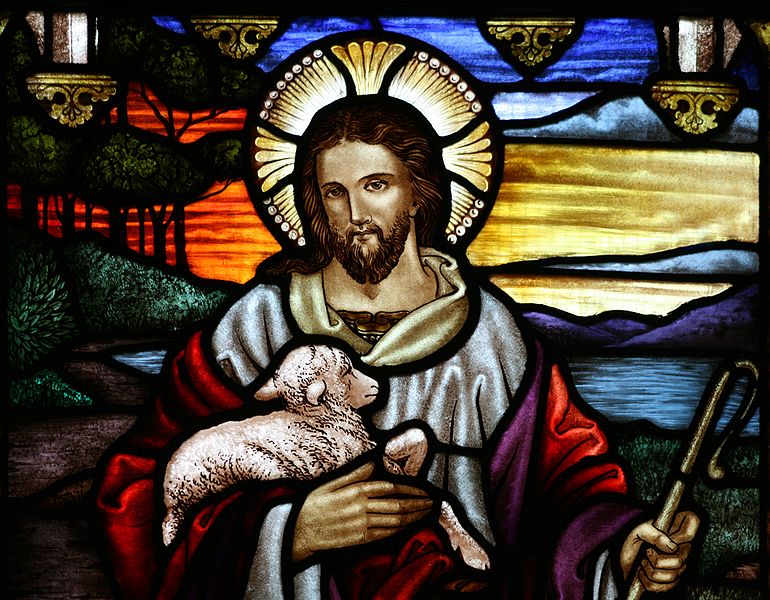
 |
| Photo (2009) by Toby Hudson |
As regular readers of this blog may know, I often have
detailed and vivid dreams. Recently, however, I awoke with no memory of a
dream, but only with four words in my mind: Honey – Beth – Best – Staff.
I had no idea what this meant, particularly since I don’t
know anyone named Beth, or what the Lord might be trying to tell me, until my
husband and I began our daily devotional readings. The first passage designated
for that day was from Psalm 119,
including the portion labeled “Beth” in our King James Version Bible!
This Psalm is not only the longest book in the
Bible, but also a stunning example of God’s literary craftsmanship and design.
Its twenty-two
stanzas each contain eight verses and are each subtitled with one of the
twenty-two letters of the Hebrew alphabet, in alphabetical order. Each verse
begins with the same letter for which the stanza is named.
Not surprisingly, Psalm
119 is all about God's Word, praising it, urging us to love it and
meditate on it, and to learn from its laws and commandments. God bringing the
“Beth” stanza of Psalm 119
into our daily reading encouraged me to consider in the context of the Psalms
the meaning of the four words He summoned into my mind.
“Honey,” the first
word in my dream phrase, is first mentioned in the Psalms in Chapter 19, which
praises God’s law, testimony, statutes, and commandments. We are to observe
these in fear of the Lord, meaning in an attitude of respecting and revering
His judgments (Psalm 19:7-8).
Normally we think of judgments as being punishments, yet
this Psalm says that they are
true and righteous, more desirable than much fine gold, and sweeter than honey
and the honeycomb. Why? Because they warn us of how not to sin against God, and
if we keep them, we will be richly rewarded (Psalm 19: 9-11).
Blessings, like honey, often come in unexpected settings.
Samson found honey in the carcass of a lion he had slain with his bare hands (Judges 14:5-9), suggesting that
sometimes we must endure great trials before we can enjoy the rewards of victory. The struggle itself makes the blessing that much sweeter, like a
spoonful of honey a mother gives her sick child after he swallows the bitter medicine.
The sweetest blessing and reward anyone could have is
salvation and eternal life, given freely to all who trust in the death, burial
and resurrection of the Lord Jesus Christ (1
Corinthians 15:1-4) as the only Way to Heaven (John 14:6). Before we tasted of the Lord’s goodness (Psalm 34:8), we were His enemies,
hating Him and rebelling against Him. But His infinite love for us is shown in
His death for us even when we were His enemies, reconciling us to Holy God and
giving us eternal life (Romans 5:10).
Once submitted to Him, He will satisfy even His enemies with
the finest wheat, for He is the bread of life, and with honey out of the rock (Psalm 81:10-16), for He is the
Rock of our salvation (Psalm 18:2,48;
62:2-7; 89:26; 95:1).
BETH (Psalm 119:9-16).
Psalm
119:9 Wherewithal shall a
young man cleanse his way? by taking heed thereto according to thy word.
10
With my whole heart have I sought thee: O let me not wander from thy
commandments.
11 Thy
word have I hid in mine heart, that I might not sin against thee.
12
Blessed art thou, O Lord: teach me thy statutes.
13
With my lips have I declared all the judgments of thy mouth.
14 I
have rejoiced in the way of thy testimonies, as much as in all riches.
15 I
will meditate in thy precepts, and have respect unto thy ways.
16 I
will delight myself in thy statutes: I will not forget thy word.
This stanza explains that following God’s Word is our best
defense against sin, and that joy comes from incorporating it into our being! We
must study it, for it reveals God and His ways and character. We must treasure
it, share it with others through our witness, meditate on it, and delight in it.
Later on in Psalm
119, verse 103 reminds us that God’s Word is sweeter than honey to our
mouth. If we fill our heart and mind with this sweetness (Philippians 4:8), rather than with the bitter poison of sin
and negativity, it will overflow into our speech and actions, refreshing others
like a pure fountain or spring (James
3:11).
Best
Surprisingly, there is only one mention of the word “best”
in the Psalms: Behold, thou hast made my
days as an handbreadth; and mine age is as nothing before thee: verily every
man at his best state is altogether vanity. Selah. (Psalm 39:5).
This is not using the word in a positive context, but
rather is a warning against placing any stock in our own strength. God is
infinite and eternal (Hebrews 13:8),
whereas our physical life disappears like a puff of smoke (James 4:14). Even at our “best” we are nothing in comparison
to Him (Psalm 8:4). He gives
us our very life, our next breath, our salvation, and the best gifts, namely
spiritual gifts, all of which pale beside His infinite love (1 Corinthians 12:31-1 Corinthians
13).
Staff
How can we therefore make the best use of the limited lifespan
He has allotted to us, as well as of the time, talents, treasure and spiritual
gifts He has distributed to us? By thankfully accepting and following His
correction, according to these four words He placed in my mind. In what seems
to be hardship and judgment there is great blessing, when He uses it to shape
us into His image (Philippians 3:10).
Just as a loving father disciplines his children for their
own good, a shepherd guides His sheep by getting their attention with the rod
and staff. The word “staff” in the Psalms
first appears in Psalm 23, the
Shepherd’s Psalm:
4 Yea,
though I walk through the valley of the shadow of death, I will fear no evil:
for thou art with me; thy rod and thy staff they comfort me.
We don’t normally think of being poked with a rod or pulled
along with the crook of a staff as being a comfort, but David in his darkest hours
recognized the healing and restoring power of God’s loving hand of correction,
as expressed in the above verse. We can take solace in the pain, knowing that
we are saved thereby even from the power of death. God is our loving Father Who corrects His children when we drift off His narrow path into harm's way (Hebrews 12:5-11).
Jesus Christ is the Good, Great, and Chief Shepherd (John 10:11-18; Hebrews 13:20; 1
Peter 5:4), guiding us when we, as sheep, have gone astray (Psalm 119:176; Isaiah 53:6; Matthew
18:12). With His staff He will lead us through the valley of the shadow
of death, not leave us helpless or hopeless within it. As we pass through that
valley we find goodness and mercy, and as we emerge from it we will dwell in
the house of the Lord forever (Psalm
23:6).
The only other mention of “staff” in Psalms is in Psalm
105:16, referring to another type of judgment, with the Lord calling
for a famine upon the land and breaking the whole staff of bread. This is a
reminder that God provides for our physical nourishment through bread, which is
the staff of life; and for our spiritual sustenance through His Word, which is
the staff of spiritual life. We would starve if He were to withhold bread from
us, but our worst judgment comes from being deprived of hearing His Word.
Honey – Beth – Best – Staff reminded me that the sweetest
blessings can come from God’s Word, not only as a source of comfort, but as a
correction when we stray far from His chosen path. May we hide His Word in our
heart, that we would not sin against Him!


