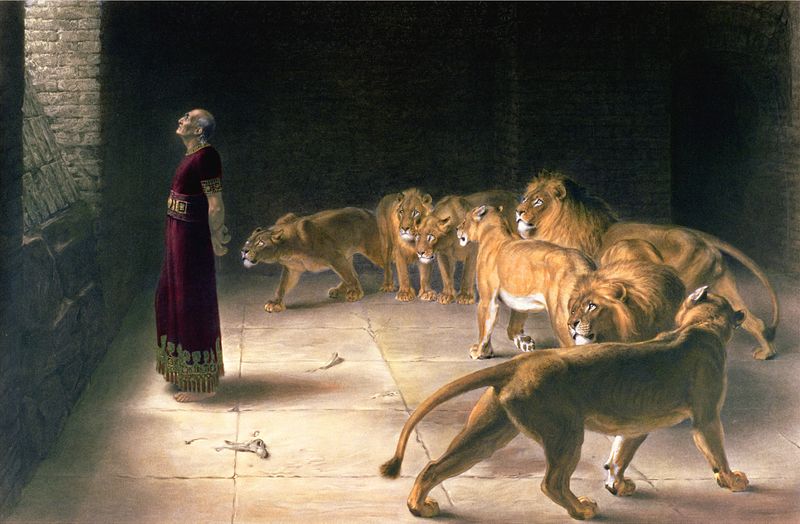
As we have seen in previous posts, fulfillment in our
Christian walk requires knowledge, wisdom, and understanding. Knowledge refers to having learned God’s Word, or at least having an intellectual
appreciation that Jesus Christ is the Son of God (John 1:1,14,18) Who came
to earth in human form to be the
perfect, sinless sacrifice to reconcile sinful man to Holy God (2 Corinthians 5:18). He rose again from the dead (1 Corinthians 15:1-4) to give all
who trust in Him everlasting life (John
3:16).
Wisdom moves us from head knowledge to heart knowledge, as
we realize His awesome power, justice and holiness and fear the
Lord (Proverbs 9:10), knowing
that we are sinners deserving eternal punishment in hell (Romans 6:23). But then, as we are born again (John 3:3-8), we experience relief that He paid the debt we could
not (Philippians 4:7), and joy in our salvation (Psalm 35:9).
Too many Christians stop there, and do not gain
understanding by applying God’s Word to their lives. But for those who show
understanding by keeping His
commandments (John 14:15),
telling others about Him, and serving Him (Matthew 28:19-20), what happens when it becomes inconvenient, unpopular, or even dangerous
to do so?
For a Godly answer to this question, we need look no further
than Daniel, who, as we have seen before, exemplifies the triplets of Christ-mind. King Darius, who had taken the Chaldean kingdom from Belshazzar as
Daniel had prophesied (Daniel 5:30-31),
set up a brain trust led by Daniel
as the chief of three presidents
commanding 120 princes (Daniel 6:1-3).
The number 120 is interesting as it is 3 (God’s perfect number
representing the Trinity) times 40, which generally symbolizes a period of testing, trial or waiting on the Lord.
For example, Jesus was tempted by the
devil for forty days in the desert (Luke
4:2); Moses lived forty years in
Egypt and forty years in the desert (Exodus
24:18, 34:1-28) before God led him to set His people free; and Elijah traveled for 40 days to Mount
Horeb to hear God’s plan for his future (1
Kings 19:8-19).
Given the nature of human politics, it is not surprising
that the other presidents and 120 princes resented Daniel’s power over them,
despite his excellent spirit, and that they plotted against him. They looked
hard for “occasion against Daniel
concerning the kingdom; but they could find none occasion nor fault;
because “he was faithful, neither was there any
error or fault found in him (Daniel 6:3-4).
They realized that the only way they could prove him
disloyal to the kingdom was to make Daniel choose between his loyalty to the
king and his obedience to God (Daniel
6:5). Extending their scheme to involve the king, presidents, governors, and the princes, counselors and captains, they convinced the king to issue
a decree that anyone who prayed to any god or man other than the king for 30 days would be thrown into the lions’
den (Daniel 6:6-7).
Upon hearing the decree, did Daniel cave to political pressure, tremble
in fear for his life, or defiantly rebel
against the king? No, he just continued worshipping God as he had always
done. He awaited confirmation that
the decree was signed; he returned home;
and he opened his windows toward
Jerusalem. As was his habit three
times a day, he kneeled, prayed, and gave thanks to God (Daniel
6:10).
Daniel’s enemies found
him doing this, appeared before the
king, and confronted him with
how Daniel had broken the law by worshipping God three times a day. The
king regretted his decision, desperately wanted to save Daniel, and worked all day trying to find an escape
clause, but his officials would not hear of it (Daniel 6:11-15).
To avoid losing face, King Darius commanded them to capture Daniel, and he had him thrown into the lions’ den, but he spoke these words to him: Thy God whom thou servest
continually, he will deliver thee. Amazing that a pagan king could utter such words of faith, hope, and encouragement!
To make Daniel’s situation even more difficult, they found a large rock, set it
across the den’s opening, and sealed
the den shut (Daniel 6:16-17). This is a foreshadowing of Jesus Christ rising from the dead after three days in the sealed tomb.
All night, as the king wondered about Daniel’s fate, he fasted, refrained from listening to music, and stayed awake. Early in the morning he arose, hurried to the lions’
den, and cried out to Daniel. He
called him servant of the living God,
proclaimed that Daniel served God
continuously, and asked if God was
able to deliver Daniel from the lions (Daniel
6:18-20).
Daniel greeted the king reverently, and answered that God had sent his angel, who shut the lions’ mouths, and that they did not harm him. He explained
that he was innocent before God and before the king, for he had done him no wrong. The king rejoiced for Daniel’s safety, commanded that he be released, and found him unharmed, “because he believed in his God” (Daniel 6:21-23).
Once again Scripture shows us salvation through faith, by
God’s grace (Ephesians 2:8-10),
with the proof of faith (in man’s eyes, for God knows our hearts regardless of
our works) being obedience (James 2:14-26). Daniel was
innocent not because he had never sinned (Romans
3:23), but because he trusted
God, was faithful to obey Him no
matter what consequences he might face, and was therefore righteous before God (Romans
4:6-22).
Those who had accused Daniel did not fare well, for the
king commanded the capture and casting into the lions’ den of these men, their children and
their wives. Just in case any
scoffers might be wondering if these were emasculated lions who lacked the strength
to attack Daniel, Scripture tells us that the lions broke all the bones of
Daniel’s enemies before they even reached the bottom of the den! (Daniel 6:24).
God rewarded Daniel for His faithfulness by sparing His life, allowing him to prosper under
the reign of King Darius, and even ensuring
his long-term position under the next king, Cyrus the Persian. Even more
amazing, God worked through this trial (Romans
8:28) in Daniel’s life to show
His mighty power to King Darius, who in turn proclaimed it worldwide! To all people, nations, and languages throughout the earth, the
king wrote, offered them peace, and issued
a decree about the God of Daniel,
the living God, Who is forever faithful (Daniel 6:25-26;28).
The king’s decree was for men throughout the kingdom to fear, respect, and recognize
God for His indestructible kingdom,
His eternal reign, and His mercy. The God Who delivered Daniel is
a God Who delivers and rescues those who trust Him, as He performs miracles in heaven, in earth, and toward His people
(Daniel 6:26-27).
May we have the understanding,
faithfulness, and courage to follow Daniel’s example by trusting
God’s Word and obeying Him, even
when it is unpopular, politically incorrect, or life-threatening to do so. God will
reward us richly by giving us abundant
life, using us for His glory,
and rewarding us in our eternal life
with Him!
© 2016 Laurie Collett